
Fire safety standards for Indian high-rise towers in 2026.
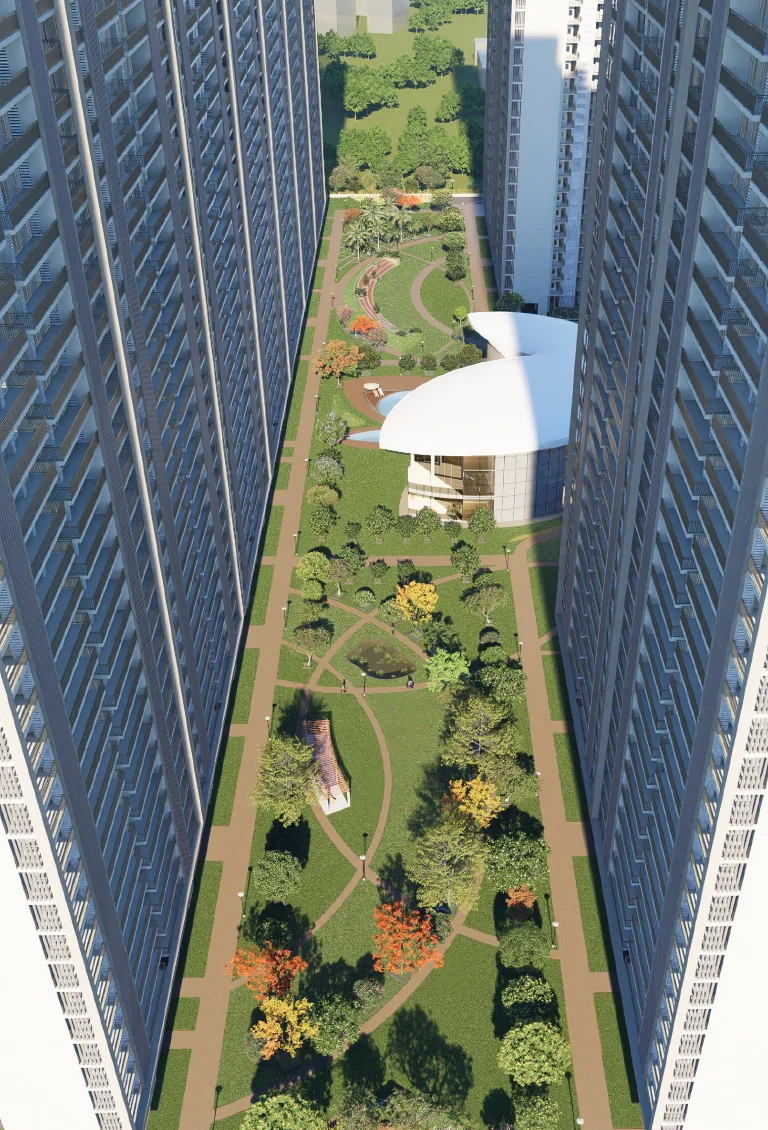
Indian fire safety for high-rise residential towers in 2026 is governed by NBC 2016 Part 4, supplemented by IS 13716, IS 15105 and the relevant state Fire Service Acts. For a G+35 tower above 100 metres tall, the mandatory provisions are: 2-hour fire-rated apartment compartments, sprinklers in every habitable room at 5 mm/min density over 280 m², two pressurised staircases at 50 Pa positive pressure, refuge floors every 24 metres above the 24-metre level, addressable fire alarm panels covering all smoke and heat detectors, fire pump at 2,250 LPM with N+1 redundancy, and dedicated fire-tender access. Forbes Fab Luxe meets every clause; NBCC monitors compliance.
Indian fire safety regulation has progressed substantially over the last decade — from a building-by-building inspection regime in the 1990s and 2000s, to a code-driven framework anchored in NBC 2016 Part 4 with state-level implementation and the Supreme Court's 2020 directives on high-rise fire safety after the Mumbai high-rise incidents. This brief works through the 2026 regime as it actually applies on a G+35 luxury residential tower in India, with the relevant code clauses, the design parameters, the equipment specifications and the Forbes Fab Luxe compliance map. It is written for the buyer who wants to verify that the brochure's "100 per cent fire compliant" claim is supported by the engineering.
The regulatory architecture, 2026.
Fire safety in Indian high-rise residential is governed at three levels. The national level is NBC 2016 Part 4 (Fire and Life Safety) — the consolidated technical code published by the Bureau of Indian Standards. The standards level is the BIS code series — IS 13716 (compartmentation), IS 15105 (sprinklers), IS 884 (hose reels), IS 12349 (smoke detection), IS 3844 (escape routes), IS 6349 (fire pumps), IS 14435 (fire alarm panels). The state level is the local Fire Service Act and the building byelaws — for Uttar Pradesh, the UP Fire Service Act 2005 with the 2024 amendments and the UP Fire Prevention Rules 2018 (revised 2025) apply. Sanction for a G+35 requires NOC from the District Fire Officer and continued annual inspections through the building's lifetime.
Building classification, and what it triggers.
NBC 2016 Part 4 classifies buildings by occupancy (residential, commercial, industrial, etc.) and by height. The height bands are: low-rise (up to 15 m), medium-rise (15 to 24 m), high-rise (24 to 50 m), tall (50 to 100 m) and very tall (above 100 m). A G+35 at ~112 m is "very tall residential." This classification triggers the maximum prescriptive requirements — refuge floors every 24 m, two pressurised staircases, full sprinklering, addressable detection, fire-tender access road, dedicated fire pumps, and a dedicated fire safety officer post-occupancy. The cost of fire safety on a very-tall residential building is approximately ₹125 to ₹170 per square foot of saleable area, or 7 per cent of total construction cost.
| Height | Sprinkler | Refuge floor | Pressurised stair | Fire pump |
|---|---|---|---|---|
| Up to 15 m (G+4) | Optional | Not required | Optional | Manual hose |
| 15–24 m (G+5–G+8) | Mandatory | Not required | Single stair | Mandatory |
| 24–50 m (G+8–G+15) | Mandatory | Not required | Mandatory | Mandatory |
| 50–100 m (G+15–G+30) | Mandatory | Required @ ≥24 m | Two stairs | 2,000 LPM + jockey |
| Above 100 m (G+30+) | Mandatory all areas | Required every 24 m | Two stairs both pressurised | 2,250 LPM + N+1 |
Compartmentation — the silent first line.
Fire compartmentation is the strategy of dividing a building into fire-resistant zones so that a fire originating in one zone cannot spread to others before evacuation is complete. Under NBC 2016 Part 4 and IS 13716, residential fire compartments are limited to 750 m² in floor area; the apartment itself is a compartment, with 2-hour fire-rated party walls (typically 230 mm brick or 200 mm AAC block plastered both sides), 2-hour fire-rated slab and 90-minute fire-rated apartment doors. The shafts (lift, stair, services) are separate compartments enclosed in 2-hour rated walls. Penetrations through compartment boundaries (cable trays, pipes, ducts) must be sealed with intumescent fire-stop systems tested to IS 12458.
Sprinklers — the active suppression layer.
Sprinklers are the active suppression layer that holds a fire in check until fire service arrival. Under IS 15105 and NBC 2016 Part 4, residential sprinklers are designed to a hazard category of "Light Hazard" — water density 5 mm/min over an operating area of 280 m². Quick-response heads (RTI ≤ 50 m·s0.5) are mandatory in habitable rooms; the 68°C activation temperature is standard. Spacing is at maximum 4.6 m × 4.6 m for habitable rooms and 4.0 m × 4.0 m for kitchens. Pipe-sizing is by hydraulic calculation under IS 15105 Annex E, with the most-remote 280 m² evaluated for design flow and pressure. Total sprinkler count on a G+35 with 144 apartments is approximately 1,800 to 2,400 heads.
Detection and alarm — the early warning system.
Smoke detection under IS 12349 must cover every habitable room, every corridor, every shaft top and every refuge floor. Photoelectric smoke detectors are standard for general areas; ionisation detectors are used in kitchens (less prone to nuisance alarms from cooking). Heat detectors (rate-of-rise, fixed-temperature) cover plant rooms and spaces with high ambient particulate. The detection signal feeds into an addressable fire alarm panel under IS 14435, with each detector individually identifiable. The panel is tied to the public address system (PAS) for evacuation broadcasts, the BMS for HVAC interlock (smoke fan switching, fresh-air shutdown), and the lift control system (lifts return to ground on alarm). Total detector count on a G+35 is typically 1,200 to 1,600.
Pressurised stairs and lobbies — the protected escape route.
The escape route in a tall residential building is the pressurised stair. Under NBC 2016 Part 4 Clause 4.7, the stair enclosure is supplied with mechanical pressurisation by a dedicated supply fan, sized to maintain 50 Pa positive pressure with respect to the corridor when one floor door is open. Air velocity at the open door must be at least 1.0 m/s to prevent smoke ingress. The fan is fed from the essential power supply (DG-backed) and continues to operate during a power failure. The stair itself must be 1,500 mm minimum width with 300 mm treads and 150 mm risers; double handrails on both sides for residential occupancy. For G+35, two pressurised stairs are mandatory.
| Parameter | Required value | Code reference |
|---|---|---|
| Stair pressure (door closed) | 50 Pa above corridor | NBC 4.7 |
| Door velocity (one door open) | ≥1.0 m/s | NBC 4.7 |
| Fan capacity (per stair) | 15,000–25,000 m³/h | NBC 4.7 |
| Stair clear width | ≥1,500 mm | NBC 3.5 |
| Tread / riser | 300 / 150 mm | NBC 3.5 |
| Door fire rating | 90 min | IS 3614 |
| Power source | Essential (DG backed) | NBC 4.13 |
Refuge floors — the holding area.
A refuge floor is a partially open level where occupants can shelter while waiting for fire service evacuation. Under NBC 2016 Part 4, a refuge floor is required at every 24 metres of height above the 24-metre threshold. For a G+35 at 112 m, refuge floors are typically positioned at floor 9 (~28 m), floor 18 (~56 m) and optionally floor 27 (~84 m). Each refuge floor must provide 1 m² per 25 m² of habitable area on the floors served, be open on at least one side to outdoor air, have a separate fire riser, separate detection circuit, and separate public address system. The refuge floor is not occupied by residences — it is a safety asset embedded in the floor count. On Forbes Fab Luxe, refuge floors are at floor 9 and floor 18.
Fire pumps and risers — water under pressure.
The fire-fighting water system on a G+35 has three pumps: main pump (2,250 LPM at 7 bar), standby pump (2,250 LPM at 7 bar, full redundancy), jockey pump (180 LPM at 7 bar) for pressure maintenance. The pumps are diesel and electric — at least one of the main and standby is diesel-powered for redundancy from the electrical supply. The fire water tank must be 200 m³ minimum, stored at the lowest level with direct fire-tender access. Wet risers are 100 mm internal diameter, with 50 mm hydrant landing valves at every floor and at the refuge floors. The riser arrangement allows the fire service to connect a tender at ground level and pump water to any floor through the riser, augmenting the building's own pumps.
Fire-tender access — the perimeter requirement.
NBC 2016 Part 4 Clause 4.6 requires a hard-standing fire-tender access road around every high-rise tower with a minimum carriageway width of 6 metres, gradient ≤ 1:10, and turning radius ≥ 12 metres. The road must be capable of supporting a fully laden fire tender (gross vehicle weight ~24 tonnes). For a G+35, the fire tender's hydraulic platform must be able to reach any window face — meaning the road must run within 6 to 8 metres of the building face on at least two sides. Hydrant landing connections from the building riser to the fire-tender pump must be at the access road perimeter at ground level, with twin 63 mm couplers on each riser.
Full NBC 2016 Part 4 compliance, NBCC-monitored.
Forbes Fab Luxe Residences is engineered to the full prescriptive requirements of NBC 2016 Part 4 and the UP Fire Service Act 2005 (2024 amendments). Apartment compartments are 2-hour fire-rated. Sprinklers cover every habitable room, every corridor and every common area at 5 mm/min density. Two pressurised stairs run the full height of every tower at 50 Pa positive pressure. Refuge floors are at floor 9 and floor 18 of every tower, with separate riser, detection and PA system. The fire pump is 2,250 LPM with N+1 redundancy. Detection is fully addressable. Fire-tender access roads run around every tower with 6 m carriageway and 12 m turning radius. NBCC monitors the entire fire safety scope at every milestone — installation, testing, commissioning. The annual fire NOC is held by the project. For the project specification, see Fab Luxe specifications. For coverage of the underlying fire systems brief, see Fab Luxe fire safety brief.
What the buyer should verify before booking.
- Building height classification. Above 100 m triggers the full very-tall residential regime — refuge floors every 24 m, both stairs pressurised, addressable detection.
- Fire NOC. Has the project obtained the District Fire Officer's NOC under the state Fire Service Act?
- Sprinkler scope. Are sprinklers installed in every habitable room? Or only in corridors? The first is NBC-compliant; the second is not.
- Refuge floor location. Are refuge floors positioned every 24 m above 24 m? On a G+35, expect at least two refuge floors.
- Stair pressurisation. Are both stairs pressurised? Are the pressurisation fans on essential (DG-backed) power?
- Fire pump configuration. N+1 redundancy at 2,250 LPM? Diesel + electric pump combination?
- Annual fire audit. Is the project committed to annual fire NOC renewals post-handover? This is typically a maintenance corpus item.
For coordinated coverage across the network, see Forbes Residences for the architectural perspective, Forbes Property Noida for the investment view, and Forbes Property for the editorial journal. For the deeper coverage of structural systems above the foundation, see G+35 tower design.
Frequently Asked Questions
What fire safety code applies to high-rise residential in India?
The primary fire safety code is NBC 2016 Part 4 (Fire and Life Safety). It is supplemented by IS 13716 (compartmentation), IS 15105 (sprinklers), IS 884 (hose reels), IS 12349 (smoke detection), IS 3844 (escape routes) and the state-level fire service regulations. For Uttar Pradesh, the UP Fire Service Act 2005 with 2024 amendments applies additionally.
Are sprinklers mandatory in residential apartments in India?
Yes — for any residential building above 15 metres in height, sprinklers are mandatory under NBC 2016 Part 4. The required sprinkler density is 5 mm/min over 280 m² of operating area. For G+35 luxury residences, sprinklers are installed in every apartment (kitchen, living, bedrooms), corridors, basements, refuge floors and lift lobbies.
What is a refuge floor?
A refuge floor is a designated open level where occupants can shelter during a fire while waiting for fire service evacuation. Under NBC 2016 Part 4, a refuge floor is required at every 24 metres of height above 24 metres — meaning a G+35 needs refuge floors at approximately floors 8, 16 and sometimes 24. The refuge area must be 1 m² per 25 m² of habitable area served.
What is fire compartmentation?
Fire compartmentation divides a building into fire-resistant zones to limit fire spread. Each apartment is a fire compartment with 2-hour fire-rated walls and slabs. Doors at compartment boundaries must be self-closing with a 90-minute fire rating. The total enclosed area of a residential fire compartment must not exceed 750 m² under NBC 2016 Part 4 Table 1.
How many staircases does a G+35 tower need?
A G+35 residential tower typically requires two staircases, both pressurised under NBC 2016 Part 4 Clause 4.7. Each stair must have minimum width of 1,500 mm, treads of 300 mm and rises of not more than 150 mm. The combined width must allow for full population evacuation in under 5 minutes.
What is the fire pump capacity for a G+35 residential tower?
Fire pump capacity is 2,250 LPM at 7 bar pressure under NBC 2016 Part 4. The system has a main pump, a standby pump and a jockey pump (180 LPM at 7 bar) to maintain riser pressure. Minimum static fire water tank capacity is 200 m³ stored at the lowest level with direct fire-tender access.
Does Forbes Fab Luxe meet fire safety standards?
Yes. Forbes Fab Luxe Residences is fully compliant with NBC 2016 Part 4 and the UP Fire Service Act. Specifications include 2-hour rated apartment compartments, sprinklers in every habitable room, refuge floors at floors 9 and 18, two pressurised stair cases, 2,250 LPM fire pump with N+1 redundancy, hydrants at every floor, addressable fire alarm panel, and fire-tender access roads. NBCC monitors fire systems through every milestone.
Sources & Indian Standards Referenced
- NBC 2016 Part 4 — Fire and Life Safety. Bureau of Indian Standards.
- IS 13716:1993 — Code of Practice for Compartmentation of Buildings.
- IS 15105:2002 — Code of Practice for Design and Installation of Fixed Automatic Sprinkler Fire Extinguishing Systems.
- IS 884:1985 — First-Aid Hose Reel for Fire Fighting.
- IS 12349:1988 — Code of Practice for Fire Alarm Systems.
- IS 14435:2018 — Manually Operated Fire Alarm Systems.
- IS 3844:1989 — Code of Practice for Installation and Maintenance of Internal Fire Hydrants.
- IS 3614 (Parts 1 & 2):1992 — Fire Check Doors.
- IS 6349:1989 — Specification for Fire Pumps.
- IS 12458:1988 — Test for Fire Resistance of Building Materials.
- UP Fire Service Act 2005 (with 2024 amendments) — State-level fire safety legislation.
- UP Fire Prevention Rules 2018 (revised 2025) — State-level implementation rules.
- UP RERA — Mandatory fire NOC disclosures under the Real Estate (Regulation and Development) Act 2016.
Verify the Fab Luxe fire safety specification.
Refuge floors, pressurised stairs, sprinklers in every room — engineered to NBC 2016 Part 4 and NBCC-monitored.
View Technical Specs →