
UP RERA 2026: a complete buyer's guide.
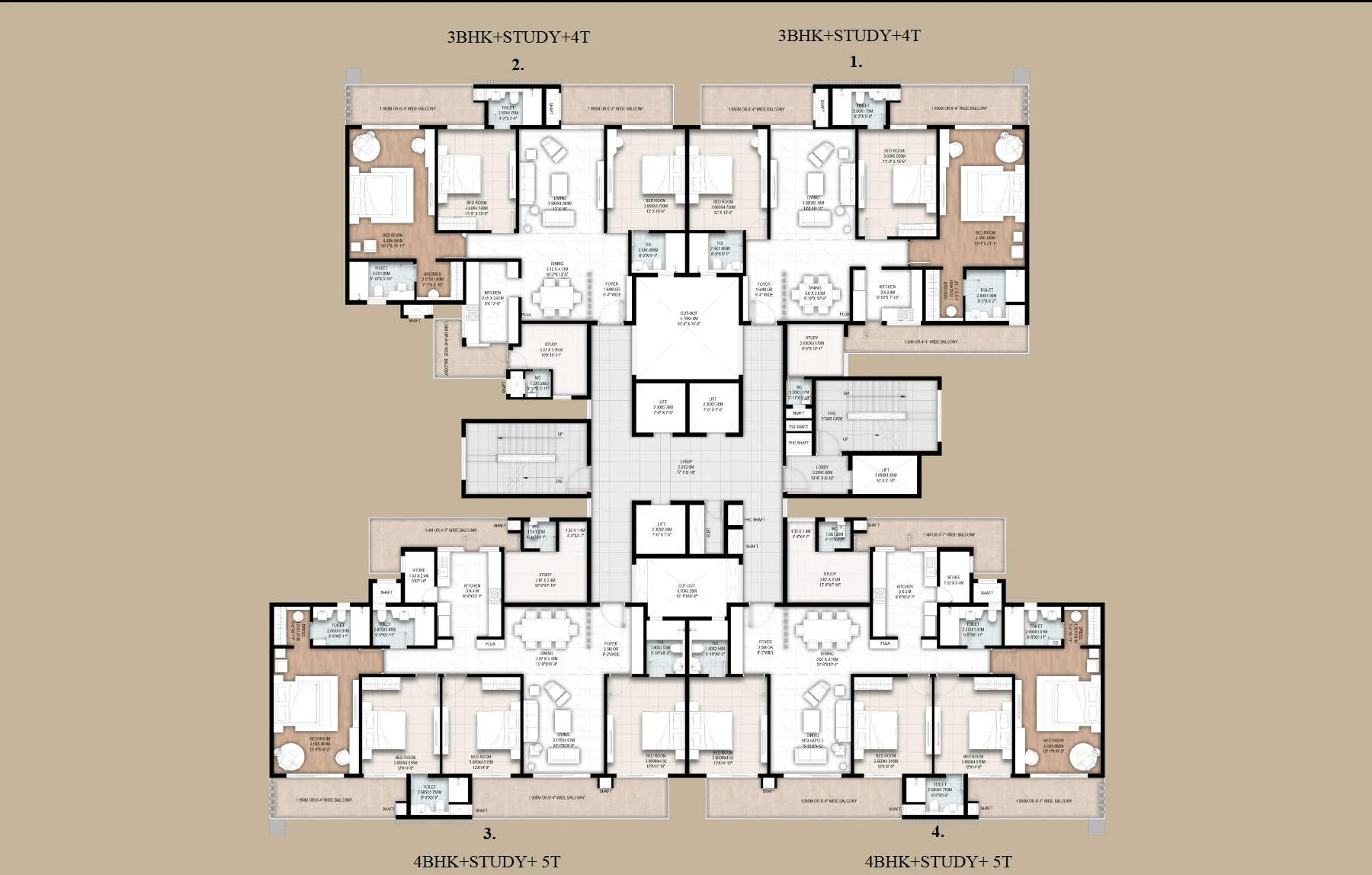
The Uttar Pradesh Real Estate Regulatory Authority (UP RERA) is the state regulator that administers the Real Estate (Regulation and Development) Act, 2016 in Uttar Pradesh. For a buyer in Noida, Greater Noida, Greater Noida West (Noida Extension) or any other part of the state, UP RERA is the single largest source of buyer protection. It is also one of the most under-utilised. This brief is a 2026 walk-through of UP RERA — how the portal works, what the registration timeline actually looks like, what the mandatory disclosures are, how the escrow rule operates in practice, and how a buyer files a complaint when something goes wrong. The brief is written for a buyer who wants to use the regulator effectively, not just acknowledge that one exists.
What UP RERA covers — and what it does not.
UP RERA covers every residential or commercial project in Uttar Pradesh that exceeds either 500 square metres of built-up area or eight apartments per phase. Every project meeting either threshold must be registered with UP RERA before any sale, advertisement or pre-launch marketing. UP RERA covers the project itself, the developer, the project architect, the project engineer and the project chartered accountant. UP RERA does not cover individual flat owners selling resale units, projects that are fully constructed and have a valid occupancy certificate at the date of sale, or rental transactions. For buyers of new launches and under-construction units, the registration is the floor of legal protection. For deeper context on the 2016 Act itself, see our RERA homebuyer's guide.
The UP RERA portal — a walk-through.
The UP RERA portal lives at up-rera.in. The most useful page for a buyer is "Project Search," which returns the full registration record of any project in the state. Search by project name, registration number, district or builder name. The result page presents nine tabs, each with a different category of disclosure. The first tab, "Project Details," carries the master plan, floor plans, unit configurations, total saleable area, common area allocation and construction schedule. The second tab, "Approvals," carries the sanction plan, the environmental clearance, the fire NOC, the water and power sanction and the title certificate. The third tab, "Promoter Details," carries the developer's audited financials and the disclosed pending litigation. The fourth tab, "Bank Details," carries the project escrow account number and the IFSC. The fifth tab, "Quarterly Progress," carries the construction status updated on a quarterly basis. The remaining four tabs cover agreements, complaints, miscellaneous filings and project status changes. A diligent buyer reads all nine before signing the agreement.
| Tab | Contents | What the buyer should verify |
|---|---|---|
| Project Details | Master plan, floor plans, total area, schedule | Match against the brochure |
| Approvals | Sanction plan, EC, fire NOC, title certificate | Currency of every approval |
| Promoter | Audited financials, pending litigation | No major outstanding litigation |
| Bank Details | Project escrow account number, IFSC | Real account, scheduled bank |
| Quarterly Progress | Construction milestones, photos | Match against site visit |
| Agreement | Standard agreement template | Compare to your draft |
| Complaints | List of active and disposed complaints | Pattern of unresolved grievances |
| Misc. | Filing history | Compliance discipline |
| Status Change | Any timeline change applications | Schedule slippage history |
Registration timeline — how long it really takes.
UP RERA section 5 mandates that the regulator dispose of a registration application within 30 days of receipt of a complete application. In practice, the 30-day clock pauses every time the regulator raises a query, and in practice the typical project is registered between 30 and 60 working days from filing. Greenfield projects with all approvals current and a clean title can be registered in under 30 days. Projects with stale approvals, contested title or incomplete documentation see longer timelines. The application status is published on the portal in near real time, and the buyer can check the status at any time. For Forbes Fab Luxe, the application has been filed and the registration number, once issued, will be published on the project RERA disclosures page. The current status is also covered in the May 2026 construction update.
Mandatory disclosures — what the developer must publish.
Section 4 of the 2016 Act, read with UP RERA Rule 4, sets the mandatory disclosure list. The developer must publish, at the time of registration: the project name, project address, total project area, total proposed saleable area, total open area, ground coverage, FAR utilisation, list of approvals with their issuing authorities and validity dates, sanction plan as approved, layout plan, floor plan for every unit type, master plan, common area allocation per unit type, list of all amenities and the area allocated to each, the construction schedule by milestone, expected possession date, total estimated project cost, source-and-use of funds, project escrow bank details, list of project consultants (architect, engineer, structural consultant, MEP consultant, fire consultant, contractor, project director), audited financials of the developer for past three years, list of any pending or threatened litigation against the project or the developer, and the standard agreement template that will be used with buyers. Every disclosure is enforceable. A misleading disclosure is a UP RERA offence.
The escrow rule — what 70 per cent really means.
The single most consequential RERA provision is the escrow rule. Section 4(2)(l)(D) of the Act requires that 70 per cent of all customer collections be deposited into a separate, project-specific escrow account with a scheduled bank. The remaining 30 per cent is available to the developer for sales, marketing, overhead and other project costs. The escrow account name, number and IFSC are disclosed on the UP RERA portal. Withdrawal from the escrow is permitted only for project construction costs, and only against a co-signed certificate from the project's chartered accountant, the project architect and the project engineer. The certificate must state that the withdrawn amount corresponds to actual construction expense incurred. The bank cannot release funds without all three signatures. The architectural defence is that this triple-key mechanism makes inter-project diversion of funds practically impossible — and inter-project diversion is the single largest cause of stalled luxury projects in NCR over the past fifteen years. For the precedent on stalled-project recovery, see our Supreme Court-mandated projects guide.
Quarterly progress reports — what they are, and how to read them.
UP RERA mandates a quarterly progress report on every registered project. The report includes tower-wise construction status (with photos), expenditure against the approved budget, escrow account balance and recent withdrawals, any change to the committed schedule, and a developer's signed declaration of accuracy. The report is filed within thirty days of the quarter end. For a buyer, the QPR is the most important document on the portal — it is the only enforceable, dated record of the project's progress. Three things to look for: consistency of the photo set (real construction photos, not renderings), monotonic monotone progression of the milestone status (no regression, no inexplicable jumps), and consistency between the photo evidence and the developer's claim. A QPR that publishes a "20 per cent superstructure complete" while the photo shows only foundation level is a red flag. The buyer's most powerful tool is a personal site visit cross-referenced against the QPR.
The complaint mechanism — how to file, what to expect.
If a buyer's grievance is not resolved by the developer's customer service, the formal route is a UP RERA complaint. The complaint can cover delay in possession, deviation from the sanction plan, deviation from the agreement, refund disputes, defect liability, false advertising or any other RERA offence. The complaint is filed on the UP RERA portal under "Complaint Registration." The buyer attaches the allotment letter, the agreement (if signed), the demand letters paid, the construction status evidence, and the specific grievance with relief sought. The processing fee is Rs. 1,000. The complaint is assigned to a member or a single-member bench at UP RERA. A first hearing is typically scheduled within 30 to 60 days of registration. The Authority must dispose of the complaint within 60 days of receipt under section 31 of the Act, although extensions are allowed in complex matters. Orders can include directions for refund, compensation, possession, completion, or specific performance. UP RERA orders are enforceable as a decree of a civil court under section 40.
| Step | Action | Typical timeline |
|---|---|---|
| 1 | Send a written complaint to the developer; allow 30 days | Day 0 to Day 30 |
| 2 | If unresolved, file complaint on UP RERA portal | Day 30 to Day 35 |
| 3 | Pay Rs. 1,000 processing fee | Same day |
| 4 | Receive complaint registration number, hearing notice | Day 35 to Day 60 |
| 5 | Attend first hearing (in-person or online) | Day 60 to Day 90 |
| 6 | Final order of the Authority | By Day 120 (statutory) |
| 7 | If unsatisfactory, appeal to UP REAT (Appellate Tribunal) | Within 60 days of order |
| 8 | Enforcement, if order is in buyer's favour | Per CPC procedure |
UP RERA versus other state regulators — where it stands.
UP RERA is generally regarded as one of the more buyer-friendly state regulators in India. The portal is functional and the data is accessible. The order disposition rate is in the upper quartile among state regulators. The complaint turnaround time is competitive. The areas where UP RERA could improve are the speed of registration approvals (currently slower than Maharashtra) and the depth of the financial audit on the escrow account (currently dependent on the project CA, with no statutory third-party audit). For a buyer in NCR, the practical implication is that UP RERA is a credible regulator but not a substitute for the buyer's own due diligence. The portal disclosures are the starting point; the site visit and the document pack are the verification.
The buyer's RERA checklist — before signing.
- Verify the UP RERA registration number on the portal — number, date, validity
- Match the master plan, floor plans and unit configurations on the portal against the brochure
- Verify all statutory approvals — sanction plan, EC, fire NOC, title certificate
- Read the audited financials of the developer for the past three years
- Check the list of pending or disposed complaints — pattern matters
- Read the standard agreement template and compare to your draft
- Verify the project escrow account number with the issuing bank if possible
- Read the latest two quarterly progress reports
- Cross-reference the QPR claims against an actual site visit
- Verify the registered office address of the developer; corroborate with MCA21
UP RERA on Forbes Fab Luxe — where things stand.
The UP RERA registration application for Forbes Fab Luxe Residences has been filed and is in the standard processing queue. The supporting document pack — sanction plan, EC, fire NOC, title certificate, layout, master plan, floor plans, unit specifications, audited financials, escrow account, agreement template — has been submitted in full. The registration number, once issued, will be published on the project RERA disclosures page and on the UP RERA portal. From that point onwards, the project will publish quarterly progress reports through the portal — the Q2 2026 report being the first such filing. Buyers can verify all disclosures by searching the project name on the UP RERA portal Project Search. For the cross-network NCR investment perspective, see Forbes Property Noida; for the state-wide investment thesis, see Forbes Property.
Frequently Asked Questions
How do I check the RERA status of a project in Uttar Pradesh?
Visit the UP RERA portal at up-rera.in, click the Project Search option, and search by project name, registration number, district, builder name or location. The portal returns the project's registration certificate, the approved drawings, the title certificate, the escrow account details, the quarterly progress reports and the list of any active complaints. The same data is also accessible to NRIs through the publicly available link.
What is the typical UP RERA registration timeline?
For a new residential project with all approvals in place (sanction plan, environmental clearance, fire NOC, water and power sanction, title certificate, layout approvals), the UP RERA registration is typically issued within 30 to 60 working days of a complete application. Projects with incomplete approvals see longer timelines as the regulator queries the gaps. UP RERA publishes the application status on the portal in near real time.
What are the mandatory RERA disclosures for a builder?
Under section 4 of the 2016 Act and the UP RERA rules, every registered project must disclose: builder details, project details (master plan, floor plans, unit configurations), title certificate, all statutory approvals, construction schedule by milestone, escrow account information, agreement for sale template, list of pending litigation, the audited financials of the developer for past three years, and quarterly progress reports updated on the portal.
How do I file a RERA complaint in Noida?
File the complaint on the UP RERA portal under the Complaint Registration option. The complaint must include the project name and registration number, the buyer's allotment letter or agreement, the specific grievance and the relief sought. The standard processing fee is Rs. 1,000. UP RERA is required to dispose of the complaint within 60 days of registration, with a single hearing typically scheduled at the regional office in Lucknow or Greater Noida.
What is the RERA escrow rule?
Under section 4(2)(l)(D) of the RERA Act, every developer must maintain a separate escrow account with a scheduled bank, into which 70 per cent of the customer collections for a project must be deposited. Withdrawals are permitted only against certified construction expenses and only with the project's chartered accountant, project architect and engineer co-certification. The remaining 30 per cent is available for marketing, sales overheads and other project costs.
Is Forbes Fab Luxe registered with UP RERA?
RERA registration for Forbes Fab Luxe Residences is in process under UP RERA. The application has been filed with the regulator. The registration number, once issued, will be published on the project RERA page and on the UP RERA portal. The buyer will be able to verify it by searching the project name on the UP RERA Project Search.
See the full Fab Luxe RERA pack.
RERA in process under UP RERA. NBCC-monitored. Possession Dec 2028. Call +91 90905 04064.
View RERA Disclosures →